
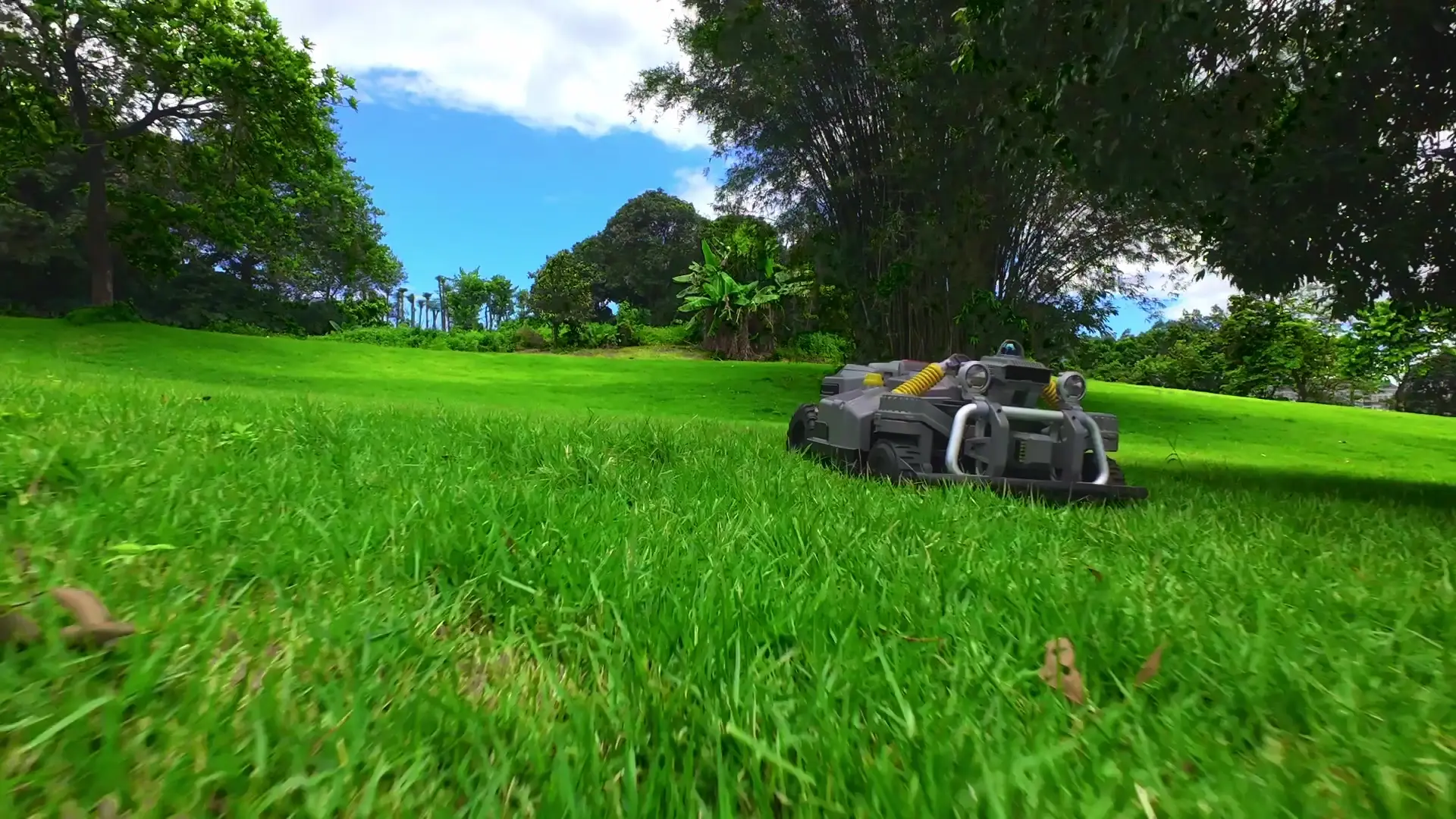
Commercial and autonomous grounds care
Robotic grounds care for commercial and institutional properties
How a commercial project runs
01
Site evaluation
Which areas suit robotic equipment, and which do not.
02
Fleet planning
Equipment mix, infrastructure, phasing and service coverage.
03
ROI analysis
Both approaches compared using your numbers.
04
Pilot
A defined trial with success criteria agreed up front.
05
Deploy and train
Installation, commissioning and operator training.
06
Support and uptime
Planned maintenance, escalation, warranty and parts.
What we cover
Commercial capabilities
Commercial robotic mowing
Commercial-grade robotic mowers matched to zones on office, retail, healthcare and business campuses.
Multi-acre properties
Coverage planning across large areas, including multiple units and zone scheduling.
Golf-course applications
Roughs, practice areas and out-of-play turf, alongside the course’s existing fleet.
Learn moreMunicipal and campus use
Parks, civic grounds, schools and universities, with safety and scheduling planned in.
Learn moreLandscape-company deployments
Robotic mowing added to contractor routes and maintenance contracts.
Learn moreLabor optimization
Routine mowing handled by equipment so crews can focus on work that needs people.
Service and uptime planning
Maintenance intervals, spares, response expectations and escalation agreed before deployment.
Learn more
In more detail
Planning guides
Commercial site evaluation
Every commercial recommendation starts on site. The evaluation decides which areas suit robotic equipment, which do not, and what it would take to deploy and support it.
Read: Site evaluationFleet planning
Once suitable areas are known, fleet planning decides how many machines, of which types, where they live, and how they are kept running.
Read: Fleet planningDeployment, commissioning and operator training
Equipment that is set up carefully tends to stay in use. Each unit is installed, mapped and tested, then handed over to operators who have been trained on it.
Read: Deployment and trainingReturn-on-investment analysis
Whether robotic mowing pays off depends on the site, the current maintenance model and local costs. An honest analysis compares both approaches using your numbers and states its assumptions.
Read: Return-on-investment analysis
Discuss a commercial project
Tell us about the properties, acreage and how they are maintained today. We will suggest a practical first step.